
Our grapes
Varietals
List of grape varieties (Vitis vinifera) and clones currently planted in the common-garden experiment. All vines were obtained as cuttings from Foundation Plant Services (FPS), UC Davis, grown on their own rootstock, and certified to be virus-free. Clones are listed by FPS number. Selections were based on known provenance (including hot climate regions (*)) and availability. Plants are grown on their own rootstock, as there is no phylloxera in the vineyard.
Note: the vines listed below do not include production vineyards with surviving old vine Cabernet Franc and Petit Verdot grapes and their clones. We have a few other remnant mystery vines that we are still trying to identify.
| Variety | Clones | Variety | Clones |
|---|---|---|---|
| Aglianico* | 1, 4, 5 | Marsanne* | 3 |
| Albarino* | 1 | Mourvedre | 2, 4 |
| Alicante Bouschet* | 2 | Nebbiolo | 1, 9 |
| Alvarinho* | 1, 3 | Negro Amaro | 1 |
| Assyrtiko* | 1, 2 | Nero D’Avola* | 2 |
| Barbera | 5, 6 | Roussanne* | 4, 5 |
| Cabernet Sauvignon | 30, 31 | Sangiovese* | 12, 15, 19, 20, 21, 23 |
| Carignane* | 3, 10, 11 | Sauvignon Blanc | 1, 23, 29 |
| Cinsaut | 3, 4, 5 | Shiraz* | 9 |
| Counoise | 2.1 | Syrah | 15 |
| Durif* | 4, 6 | Tannat | 4 |
| Falanghina* | 1 | Tempranillo | 3 |
| Fiano* | 1, 2 | Touriga Nacional* | 1, 3, 5 |
| Gamay Noir | 6, 9 | Verdejo* | 2 |
| Garnacha Tinta* | 1, 3 | Verdelho* | 6, 10, 11 |
| Macabeo* (Viura) | 568 | Viognier | 2 |
| Malbec | 22, 31 | Viura* (Macabeo) | 1 |
| Malvasia Bianca | 3 | Zinfandel* | 3, 42, 43, 44 |
Layout
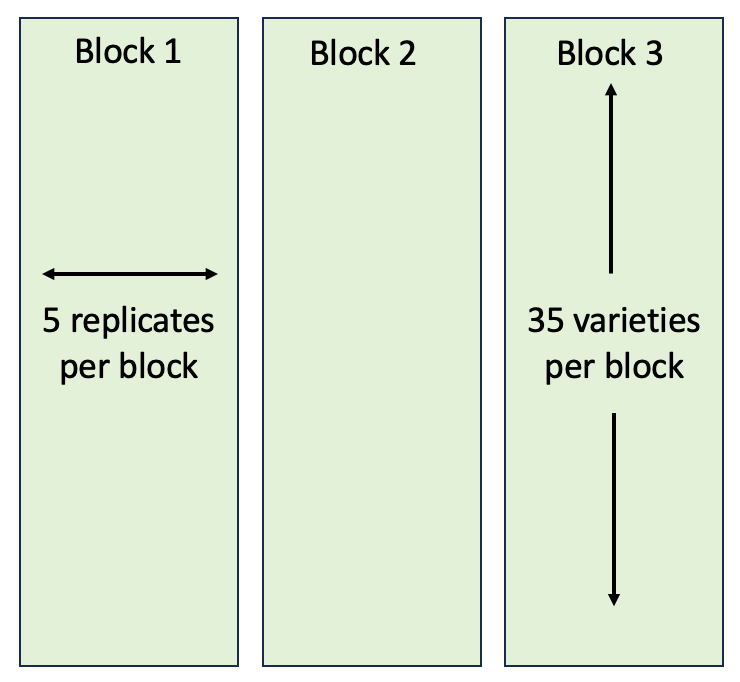
Layout of the common-garden experiment, showing experimental blocks to be given contrasting irrigation treatments.
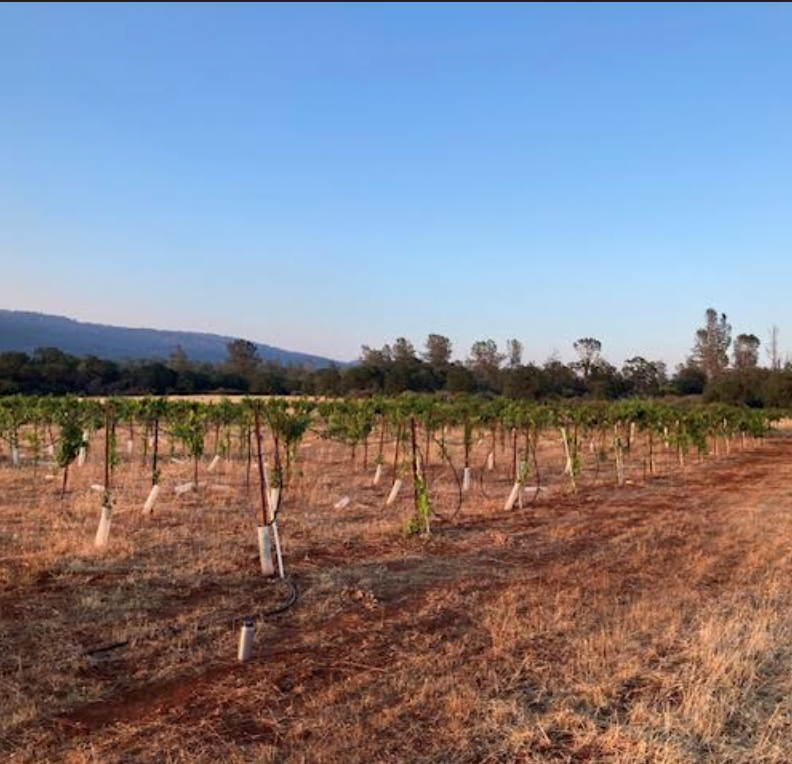
View of experimental bocks in June 2023, about 2 years after initial planting. Most plants are now 1.5m tall and many have started to produce fruit.